 Centrum Badań nad Kulturą i Mentalnością Dawnej Polski
Karolina Kwaśna
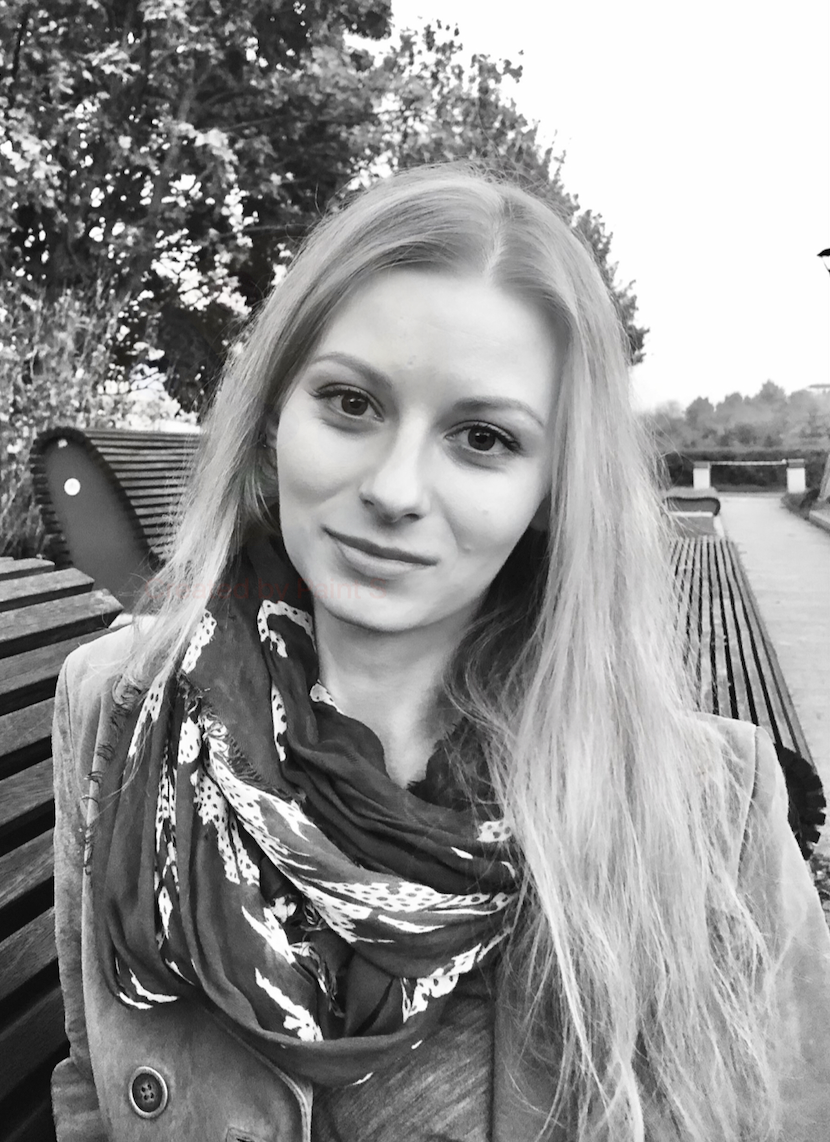 |
Karolina Kwaśna, PhDAssistant Professor |
Research Interests
- cultural history and everyday life in the early modern period;
- colonial New England in transatlantic perspective;
- critical cartography, geopoetics, and cultural representations of space;
- historical anthropology, microhistory, and borderland spaces;
- the cultural history of evil, myth, horror, and the “dark myths” of places;
- cultural transfer, translation, and memory in the circulation of historical narratives, testimonies, spatial imaginaries, and literary texts;
- the relationship between history, literature, visual culture, and popular culture.
Profile
Karolina Kwaśna is an Assistant Professor in the Department of Early Modern History at the Institute of History and Archival Studies, University of the National Education Commission, Krakow. Her work lies at the intersection of cultural history, historical anthropology, and microhistory, with particular attention to early modern culture, transatlantic spaces, and the cultural construction of historical memory.
She received her PhD in 2024 from the Faculty of Polish Studies at the Jagiellonian University, where she completed a dissertation entitled Na Ziemi Diabła. Kształtowanie się czarnego mitu Nowej Anglii [Upon the Devil’s Ground: Shaping the Dark Myth of New England], supervised by Professor Piotr Oczko. The dissertation, defended with distinction, examined the cultural, spatial, and narrative mechanisms through which colonial New England came to be imagined as a landscape of fear, violence, exclusion, and religious anxiety.
Her work brings cultural and linguistic approaches into dialogue with spatial analysis, including critical cartography, geopoetics, the materiality of sources, and methods from the digital humanities. She is especially interested in moments when, as she puts it, “history speaks in a whisper”: minor traces, local narratives, everyday practices, and marginal voices through which broader historical processes come into view. Her research asks how individual experience is recorded, silenced, forgotten, and later rediscovered, and how the past is transformed into narrative, image, myth, and cultural landscape.
Research Areas
Dr. Kwaśna develops this perspective through the study of testimonies and cultural records of historical violence – from witch trials in colonial New England and accounts concerning Indigenous peoples of North America to selected twentieth-century testimonies, including narratives connected with the Shoah. Her work also traces cultural transfers and the circulation of motifs across history, literature, art, cartography, media, and popular culture, examining how these movements shape figures of otherness, marginalization, and memory.
A further strand of her research concerns translation as a form of cultural mediation – a practice through which texts, testimonies, images, spatial imaginaries, and historical narratives move across languages, media, and communities. This perspective informs both her research on Polish translations of H. P. Lovecraft’s fiction and her work on the multilingual transmission of Polish bystanders’ voices in Claude Lanzmann’s Shoah.
Academic Projects and Activities
Dr. Kwaśna has worked on the project Shoah – głosy tych, którzy patrzyli [Shoah: The Voices of Those Who Watched], devoted to the transcription and translation of Polish bystanders’ voices in Claude Lanzmann’s Shoah. The project combines translation studies, memory studies, digital humanities, and corpus-based methods to recover voices partially obscured in the film’s multilingual transmission. Her contribution involved the preparation of transcriptions, translation materials, and a multilingual corpus of Polish witness testimonies, developed with the use of digital humanities tools, including EXMARaLDA and CLARIN-PL resources.
A second major thread of Dr. Kwaśna’s work concerns the cultural history of space and early modern cartography. She has carried out archival research at the British Library and the British Museum on cartographic sources relating to New England and Maine and has developed her work on the symbolic, narrative, and “silent” dimensions of these maps in publications and conference papers. She has also contributed to the panel The Spatial Perspective in Polish Historical Research, prepared in 2022–2024 for the 21st General Assembly of Polish Historians, in collaboration with the Department of Historical Cartography of the Polish Academy of Sciences and historians from Warsaw, Krakow, and Lublin. In 2024 she has joined the Commission for Historical Geography of the Polish Historical Society.
She has presented her research at national and international conferences on geopoetics and New England, audiovisual translation in Shoah, Holocaust bystander testimony, colonial landscapes, horror, and the cultural history of the body. Her conference work has included presentations at the University of Zurich, the University of Hamburg, the University of Reading, Vilnius University, and other academic institutions.
Selected Publications
- Potworne czy nienazwane? Szkice o polskich przekładach opowiadań Howarda Phillipsa Lovecrafta [Monstrous or Unnamed? Essays on Polish Translations of H. P. Lovecraft’s Short Stories], Katowice, 2021.
- New England in the Mirror of Geopoetics, in Colonialism and the Environment: Pasts, Presents, Futures, Heidelberg University Press, forthcoming 2026/2027.
- W zdrowym ciele, zdrowy duch? Teoria “słabszego naczynia” w kontekście nowożytnej wiedzy kartograficznej, kolonii angielskich oraz doktryny purytańskiej [A Sound Mind in a Sound Body? The “Weaker Vessel” Theory in the Context of Early Modern Cartographic Knowledge, English Colonies, and Puritan Doctrine], Rocznik Dziejów Społecznych i Gospodarczych, forthcoming 2026.
- Kwaśna, K., and M. Heydel, “Why don’t you tell them…” Unheard Voices in Claude Lanzmann’s Shoah, Przekładaniec. Translation and Memory, 2019, pp. 26–51.
- Międzyprzestrzeń na przykładzie literackiej topografii Nowej Anglii [Interspace in the Literary Topography of New England], in Człowiek twórcą historii, vol. 6, Białystok, 2024, pp. 279–303.
- Opowieści z pogranicza. O ukrytej geografii “Mapy Nowej Anglii” Johna Fostera [Tales from the Borderlands: The Hidden Geography of John Foster’s Map of New England], Z Dziejów Kartografii. Mapa a tekst, vol. 24, Warsaw, 2022, pp. 273–296.
- Thus I was conversing among the dead… Obcując ze zmarłymi w dawnej Nowej Anglii [“Thus I Was Conversing Among the Dead…”: Encounters with the Dead in Early New England], in W kręgu rodziny epok dawnych. Śmierć, Krakow, 2022, pp. 49–72.